01
Safe Removal Techniques
Nest removal requires proper protective equipment and approach methods. Our technicians are trained to handle aggressive species and hard-to-reach nest locations safely.
Safe nest removal so your family can enjoy the outdoors again.
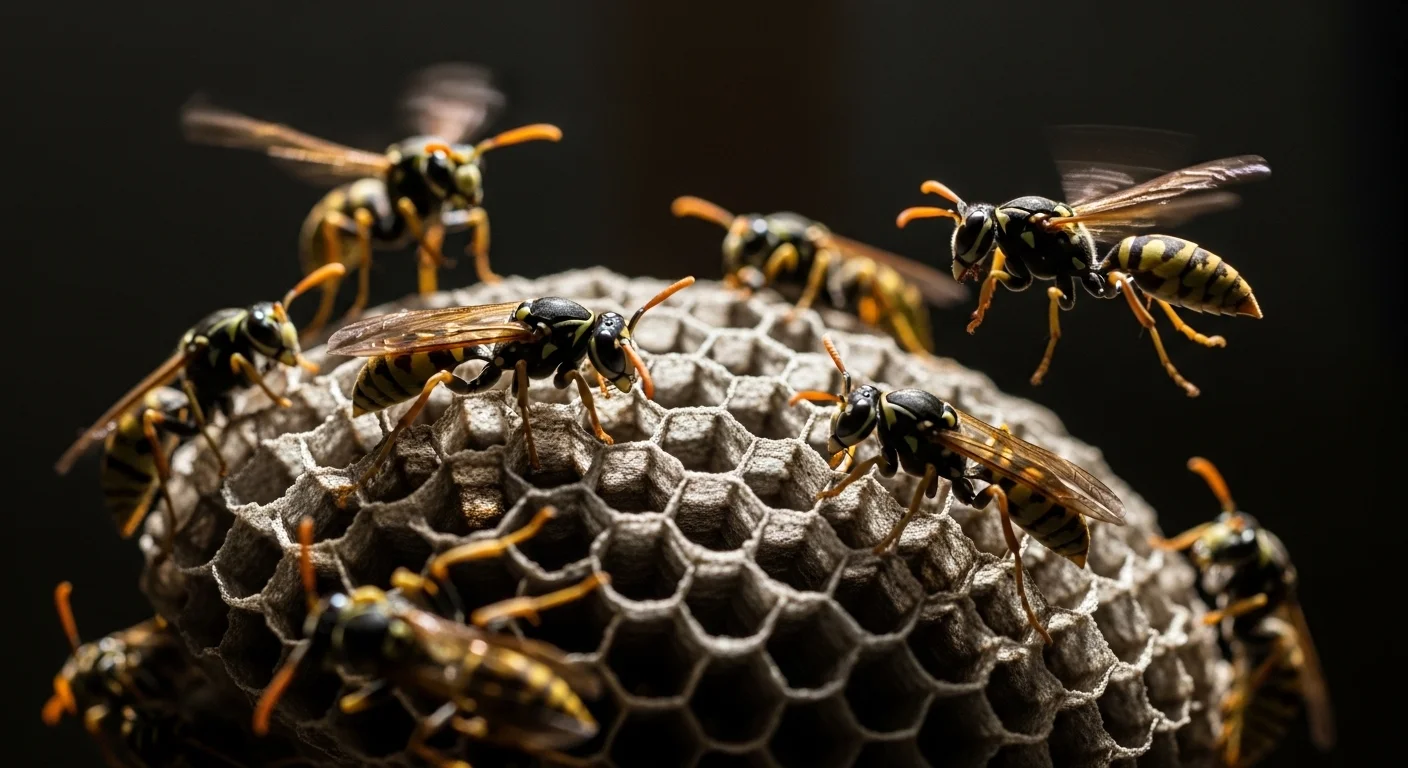
Professional nest removal for the stinging insects Summit County homeowners encounter most.
A wasp nest near your home's entrance, under a deck, or in your eaves isn't something to ignore. Wasps become increasingly aggressive as their colony grows through summer, and by late August they're at peak defensiveness. A single disturbed nest can result in multiple stings — a serious risk for anyone with allergies and a painful experience for everyone else.
In Summit County, the most common stinging insects homeowners encounter are paper wasps (nesting under eaves and overhangs), yellow jackets (ground nests and wall voids), and bald-faced hornets (large aerial nests in trees and on structures). Signs of a problem include visible nests, increased wasp activity around specific areas of your home, and wasps entering and exiting wall or ground openings.
Summit Shield provides safe, professional nest removal for all stinging insect species. We identify the species and nest location, choose the appropriate removal method, and treat the area to discourage re-nesting. We also distinguish between wasps and beneficial pollinators like honeybees — and can recommend bee relocation services when appropriate rather than extermination.
Effective stinging insect control requires proper identification, safe removal techniques, and prevention of re-nesting.
Nest removal requires proper protective equipment and approach methods. Our technicians are trained to handle aggressive species and hard-to-reach nest locations safely.
Paper wasps, yellow jackets, and hornets each behave differently and require different removal approaches. We identify before we treat.
We distinguish between harmful wasps and beneficial pollinators. Honeybee colonies are referred to local beekeepers for relocation, not exterminated.
State-licensed for all pesticide applications under Utah Department of Agriculture and Food requirements.
After removal, we treat the area to discourage new colonies from building in the same location.
We locate all nests on your property and identify the species. Yellow jackets in ground nests and wall voids require different treatment than paper wasps under eaves. We assess the safety risk based on nest location, colony size, and proximity to high-traffic areas. If the nest contains honeybees, we recommend relocation instead of removal.
Using appropriate protective equipment and species-specific treatment methods, we remove or treat the nest. Ground nests are treated at the entry point. Aerial nests are removed after treatment. Wall void nests may require targeted injection. All removal is performed during lower-activity periods (early morning or evening) for maximum safety and effectiveness.
After removal, we treat the nest site and surrounding areas with a deterrent to discourage new colonies. We also inspect for secondary nests and potential nesting sites around your property. For homes with recurring wasp problems, we recommend seasonal preventive treatments in spring before colonies establish.
We provide wasp and stinging insect control throughout Coalville and surrounding Summit County communities including Park City, Heber City, Kamas, Oakley, Wanship, Francis, and Peoa. Mountain valley properties with open eaves, decks, and outbuildings provide ideal nesting sites for paper wasps, yellow jackets, and hornets throughout the warmer months.
Wasp activity often coincides with broader seasonal pest pressure that benefits from year-round management.
Year-round treatment that monitors for and prevents wasp nesting as part of quarterly service.
Learn More →
Spring preventive treatments applied before wasp colonies establish.
Learn More →
"We had a yellow jacket nest in the ground right next to our back patio — the kids couldn't play outside. Summit Shield came out the same day, identified the nest, and removed it safely. They also treated two smaller paper wasp nests under the eaves we hadn't even noticed."

"Had wasps building nests in our garage wall void every summer. After Summit Shield treated and sealed the entry points, we haven't had a single nest come back. They even pointed out a honeybee colony on our property and recommended a beekeeper instead of killing them. Really appreciated that."
Answers to the questions homeowners ask most about wasp nests and stinging insect removal.
Every service starts with a free, thorough inspection by a licensed Summit County technician. Same-week availability. No contracts required.