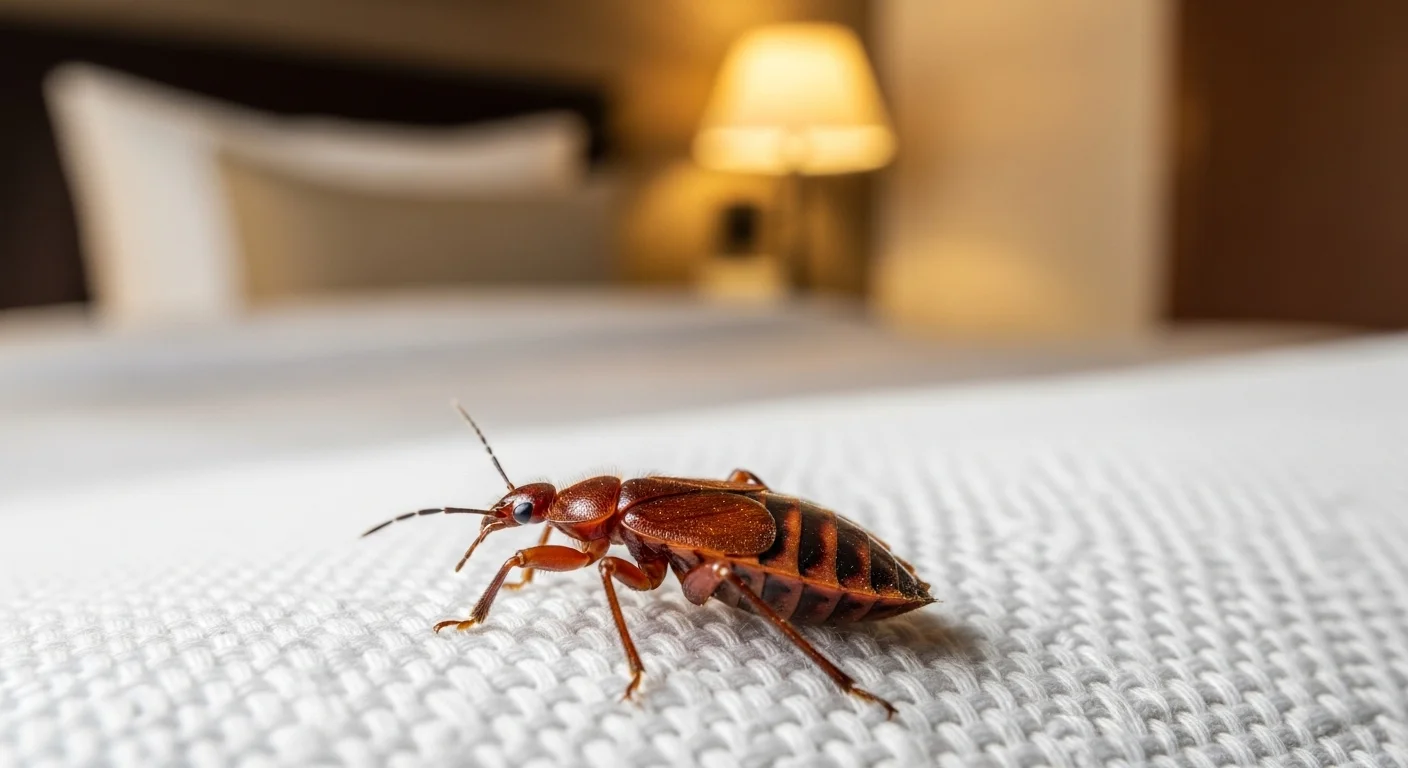
Bed bugs are one of the most misunderstood pests in Summit County. Homeowners assume they only appear in run-down motels or neglected homes. They assume they'd know immediately if they had them. They assume a quick spray from the hardware store will fix the problem. All three assumptions are wrong — and each one can turn a containable early infestation into a deeply embedded, expensive problem.
Park City presents a specific and elevated risk. As one of Utah's premier resort destinations, the city sees millions of visitors annually for ski season, the Sundance Film Festival, and summer tourism. That means constant guest turnover in hotels, vacation rentals, and short-term lodging properties — and bed bugs are exceptionally well-suited to exploit exactly that kind of environment. They travel silently on luggage, clothing, and personal items, and they can survive for months without feeding while waiting for a new host to arrive.
In this guide, we'll explain exactly where bed bugs come from, the specific ways they enter Park City homes, what the early warning signs look like, and what to do the moment you suspect an infestation.
What Bed Bugs Actually Are
Bed bugs (Cimex lectularius) are small, wingless, blood-feeding parasites that feed almost exclusively on humans. They are not a sign of poor hygiene, structural problems, or a dirty home. They are hitchhikers — opportunistic insects that have evolved over thousands of years to live in close proximity to sleeping humans, feeding at night when hosts are still and unaware.
Physical characteristics of an adult bed bug:
- Size: About the size of an apple seed — 4 to 5 mm long when unfed, swelling to 7 mm after a blood meal
- Color: Mahogany brown when unfed; reddish-brown and balloon-like after feeding
- Shape: Flat and oval-shaped when unfed; elongated after feeding
- Legs: Six legs, no wings; moves by crawling only
- Odor: Large infestations produce a musty, sweet smell often compared to almonds or raspberries
Nymphs (juvenile bed bugs) follow the same body plan but are smaller and nearly translucent until they feed. Eggs are white, about 1 mm long, and nearly impossible to see against light-colored fabric or seams. A bed bug passes through five nymph stages before reaching adulthood, each requiring a blood meal to molt.
Key Takeaway
- Bed bugs are not caused by filth — they are attracted to body heat and carbon dioxide, not garbage or clutter
- They spread exclusively through human activity — travel, used furniture, guests, or shared laundry
- They can survive 6 to 12 months without feeding in cool conditions, making them extremely persistent
- Early infestations are dramatically easier and cheaper to treat than established colonies
Where Bed Bugs Actually Come From
Bed bugs do not spontaneously appear. Every infestation has a clear origin point — a place where the bugs, eggs, or nymphs were picked up and transported. Understanding these origin points is the key to both prevention and tracing an infestation back to its source.
Hotels, Vacation Rentals & Short-Term Lodging
This is the most common vector for bed bug introduction into Park City homes. The city's hospitality industry — ski lodges, boutique hotels, Airbnbs, and vacation condos on the mountain — operates with rapid guest turnover that creates near-ideal conditions for bed bug transmission. A single infested guest can leave behind enough bugs and eggs to establish a colony, which the next guest then picks up and carries home.
Bed bugs in lodging situations typically hide in mattress seams, box spring edges, headboard crevices, nightstand drawers, and the seams of upholstered furniture near the bed. They don't stay on the mattress surface — they retreat into the tightest gaps available after feeding, making them easy to miss during routine housekeeping and even during visual inspections.
When checking into any lodging — including high-end Park City hotels — inspect the mattress seams, headboard, and nightstand before unpacking. Keep your luggage on a hard surface or in the bathroom, never on the bed or floor carpet. After returning home, run all clothing through a dryer on high heat for 30 minutes before storing.
Used & Secondhand Furniture
Used mattresses, bed frames, upholstered sofas, and nightstands are among the most reliable ways bed bugs enter a home that has never previously been exposed. Thrift stores, online marketplace pickups, estate sales, and curbside furniture finds all carry meaningful risk. Even a piece of furniture that looks clean and shows no visible signs may harbor eggs in seams, inside joints, or beneath fabric stapled to a frame.
In Summit County, where many homeowners furnish vacation properties with secondhand pieces, this risk is compounded. A single used bed frame purchased for a guest room can seed an infestation that spreads throughout the property before anyone notices.
Guests & Overnight Visitors
A houseguest who has recently stayed in an infested hotel or whose own home has an undetected infestation can introduce bed bugs via their luggage, clothing, or personal bags. Bed bugs are drawn to warmth and carbon dioxide — they don't stay in one location indefinitely. When a person sets their bag down in a guest room, the insects may move from the bag into the room's soft furnishings within hours.
This is not a reason to stop hosting guests, but it is worth being aware of — especially during ski season when Park City residents frequently host friends and family coming from out of state.
Shared Laundry Facilities
Multi-unit properties — condos, apartment complexes, and HOA communities common throughout the Park City area — can spread bed bugs through shared laundry rooms. Transporting infested bedding or clothing to a laundry room and back can leave bugs behind in folding tables, laundry carts, or on surfaces where other residents then place their clean items.
Neighboring Units in Multi-Family Properties
Bed bugs can migrate between adjacent units through wall voids, electrical conduit openings, plumbing chases, and even under doors. In Park City's many ski-in/ski-out condominiums and resort complexes, an infestation in one unit can spread to a neighboring unit within weeks if the original infestation goes undetected or untreated. This is one reason bed bug problems in multi-family buildings almost always require building-wide inspection rather than treatment of a single unit.

Early Warning Signs of a Bed Bug Infestation
Bed bugs are masters of concealment. Many homeowners live with an early-stage infestation for weeks or months before making the connection between their symptoms and the bugs themselves. Knowing what to look for in the first weeks dramatically improves the odds of catching an infestation before it becomes deeply established.
Bites
Bed bug bites typically appear as small, red, itchy welts, often in a line or cluster on exposed skin — arms, neck, shoulders, and face are most common since these areas aren't covered during sleep. However, bites alone are not a reliable indicator. About 30% of people show no visible reaction to bed bug bites at all. Others may experience reactions delayed by several days. Bites are a symptom to take seriously, but a negative bite reaction does not mean you don't have bed bugs.
Blood Spots on Sheets
Small rust-colored or dark red spots on your sheets, pillowcase, or mattress are a telling early sign. These occur when a feeding bug is accidentally crushed during sleep, or when partially digested blood is excreted by the bug after feeding. Fresh spots are bright red; older spots turn dark brown.
Dark Fecal Spots
Bed bug excrement appears as tiny dark brown or black ink-dot-sized spots along mattress seams, inside box spring folds, on headboards, and along baseboards near the bed. These spots will smear when rubbed with a damp cloth. A cluster of these spots is one of the most reliable indicators of an active infestation.
Shed Skins (Molts)
As nymphs develop through their five stages, they shed their outer skin (exoskeleton) each time. These translucent, hollow shells accumulate near harborage areas and are often easier to spot than the bugs themselves. Finding multiple shed skins is a sign the infestation has been active long enough for nymphs to go through multiple molts.
Live Bugs
Adult bed bugs are visible to the naked eye, though their flat shape and preference for hiding in seams and crevices makes them easy to miss on casual inspection. The best time to look for live bugs is in the hour or two before dawn — they are most active at night and will be found on or near the mattress surface closest to a sleeping host. Use a flashlight and inspect mattress seams, the box spring, headboard joints, and the edges of nearby furniture.
A bed bug population can double in size every 16 days under optimal conditions. An infestation of 10 bugs discovered in week one becomes hundreds by week six. If you find any of the signs above, contact a licensed pest control professional immediately — do not attempt to treat it yourself with store-bought sprays, which are largely ineffective against eggs and often scatter bugs deeper into the structure.
Where Bed Bugs Hide in Your Home
Despite their name, bed bugs are not confined to beds. In established infestations, they spread to any location within crawling distance of a sleeping human. Understanding their preferred harborage points is essential for effective inspection and treatment.
| Location | Specific Hiding Spots | Infestation Stage |
|---|---|---|
| Mattress | Seams, tufts, tags, piping edges, any fold | Early & established |
| Box spring | Interior frame, fabric staple lines, corner joints | Early & established |
| Bed frame & headboard | Screw holes, joints, hollow metal tubing, crevices | Early & established |
| Nightstands & dressers | Drawer joints, back panel, underside, hardware holes | Early & established |
| Upholstered furniture | Seams, skirt folds, cushion zippers, underneath | Established |
| Baseboards & molding | Gaps at floor level, nail holes, loose sections | Established |
| Wall outlets & switch plates | Behind the cover plate, inside conduit | Established |
| Carpet edges | Under tack strips near the bed wall | Established |
| Picture frames & wall decor | Behind the frame, along the backing | Heavy infestation |
Bed bugs can flatten their bodies to fit into a space no thicker than a credit card. If a gap exists in any surface near a sleeping person, a bed bug can hide there.
Prevention: Reducing Your Risk in Park City
You can't eliminate all risk of bed bug exposure, especially in a high-travel community like Park City. But specific, consistent habits dramatically reduce the likelihood of bringing them home or allowing a small exposure to become a full infestation.
When Traveling or Hosting Guests
- Inspect lodging before unpacking: pull back mattress corners, check seams, look at the headboard and nightstand
- Keep luggage on a hard rack or in the bathroom, never on the bed, carpet, or upholstered chair
- After any trip, run all clothing through a dryer on high heat (at least 120°F) for a minimum of 30 minutes before placing in drawers or closets
- Consider storing travel bags in large sealed plastic bags between trips
- When guests stay over, wash and dry their used bedding on high heat before storing it again
When Buying Secondhand Furniture
- Never accept a used mattress or box spring, regardless of condition or source
- Inspect all secondhand upholstered furniture thoroughly before bringing it indoors; look at every seam, joint, and hidden surface
- When in doubt, treat furniture with a licensed pest control professional before introducing it to your home
- Hard-surface items (wood frames, metal bed frames) carry lower risk but should still be inspected at joints and screw holes
For Multi-Unit Properties
- Seal wall penetrations, conduit openings, and gaps around baseboards in units adjacent to any known infestation
- Use bed bug interceptor cups under bed and furniture legs to detect early movement
- Encase mattresses and box springs in certified bed bug-proof encasements year-round
- Report any signs immediately to property management — delays allow spread to neighboring units
What to Do If You Think You Have Bed Bugs
The single most important thing you can do if you suspect bed bugs is to call a licensed pest control professional before taking any action yourself. This is not overcaution — it reflects the reality of how bed bug infestations spread when disturbed.
Over-the-counter sprays kill bed bugs on direct contact but have zero residual effect and do not reach eggs, which are resistant to most pesticides. More critically, spraying exposed areas causes bugs to scatter deeper into the structure — into wall voids, electrical conduit, and adjacent rooms — turning a localized problem into a multi-room or multi-unit infestation. Vacuuming can remove live bugs but leaves eggs behind and risks spreading the infestation if the vacuum bag or canister isn't handled correctly.
What You Can Safely Do Before the Technician Arrives
- Don't move furniture, mattresses, or bedding to other rooms. This is the fastest way to spread an infestation to a new area of your home.
- Bag and wash all bedding in hot water and dry on high heat. Seal cleaned items in plastic bags and keep them out of the room until treatment is complete.
- Document what you've found. Photograph any bugs, shed skins, fecal spots, or blood marks you discover. This helps your technician identify the scope and stage of the infestation before inspection.
- Continue sleeping in your room. Moving to a different room temporarily may feel safer but will cause bed bugs to follow their host into a new area, expanding the infestation.
- Do not apply any sprays, powders, or foggers. These products are largely ineffective against bed bugs and can make professional treatment less effective by alerting bugs to move.
If you found bed bugs after returning from a trip, note the name and location of every lodging property where you stayed. Many states have bed bug registries, and reporting an infestation to hotel management not only protects future guests — it may give you information about known prior incidents at that property.
Professional Bed Bug Treatment: What to Expect
Effective bed bug treatment requires professional-grade products, proper technique, and thorough follow-up. There are two primary treatment approaches, and a licensed technician will assess which is appropriate for the scope and location of the infestation.
Heat Treatment
Whole-room or whole-structure heat treatment raises the temperature of every surface in the treated area to above 120°F and holds it there for a sustained period. This kills all life stages — eggs, nymphs, and adults — in a single treatment, with no chemical residue. Heat treatment is particularly effective in heavy infestations or situations where chemical treatments have already been attempted. It requires full access to the space and typically takes 6 to 8 hours.
Chemical Treatment
Professional chemical treatments use prescription-strength residual insecticides applied to all harborage areas, combined with non-repellent contact killers and, in some cases, desiccant dusts in wall voids and electrical cavities. Unlike store-bought products, professional-grade formulations remain active for weeks after application, killing bugs that emerge from eggs or return from adjacent areas. Chemical treatment typically requires two to three visits spaced 10 to 14 days apart to catch newly hatched nymphs.
In both cases, a licensed technician will conduct a thorough inspection before any treatment begins to map harborage locations, identify the infestation's scope, and determine whether neighboring units in a multi-family building should also be inspected. For Park City condo and vacation rental owners, this step is especially important — an infestation discovered in one unit that is treated in isolation will frequently re-establish from an adjacent untreated unit within weeks.
Frequently Asked Questions