Spiders are among the most common creatures homeowners encounter in Summit County, and the reaction is usually the same: alarm followed by the question, "Is it dangerous?" The answer, in the vast majority of cases, is no. Of the hundreds of spider species found in Utah, only one commonly encountered in homes — the black widow — carries venom that poses a real medical risk to humans.
That said, understanding which spiders you're sharing your home with matters. Some species indicate moisture problems. Others suggest a thriving prey insect population that may need attention. And knowing the difference between a harmless wolf spider and a black widow can save you unnecessary panic — or prompt the urgent response that a widow sighting actually warrants.
This guide covers the five spiders you're most likely to find inside homes in Coalville, Park City, Kamas, and the surrounding Summit County communities, with clear identification tips and practical advice for each.
Why Spiders Enter Mountain Homes
Spiders don't enter homes because they prefer indoor living. They follow their food source. Where there are insects — ants, flies, moths, earwigs — spiders will set up shop nearby. Summit County's mountain setting creates specific conditions that push both prey insects and spiders indoors at predictable times.
As fall temperatures drop across the Wasatch Range, insects seek warmth and shelter inside homes at elevations between 5,500 and 7,000 feet. Spiders follow them. The combination of cooling outdoor temperatures, shorter days, and the first hard frosts drives a noticeable surge in indoor spider activity from late September through November.
Moisture is the other major factor. Basements, crawl spaces, and bathrooms with elevated humidity attract both the insects spiders eat and the spiders themselves. Homes with poor drainage, leaking pipes, or inadequate ventilation in lower levels consistently see higher spider populations. Addressing moisture issues is often the single most effective step for long-term spider reduction.
The fastest way to reduce spiders is to reduce what they eat. Controlling ants, flies, and other prey insects removes the food source that attracts spiders in the first place. Fewer bugs means fewer spiders — it's that simple.
Wolf Spiders
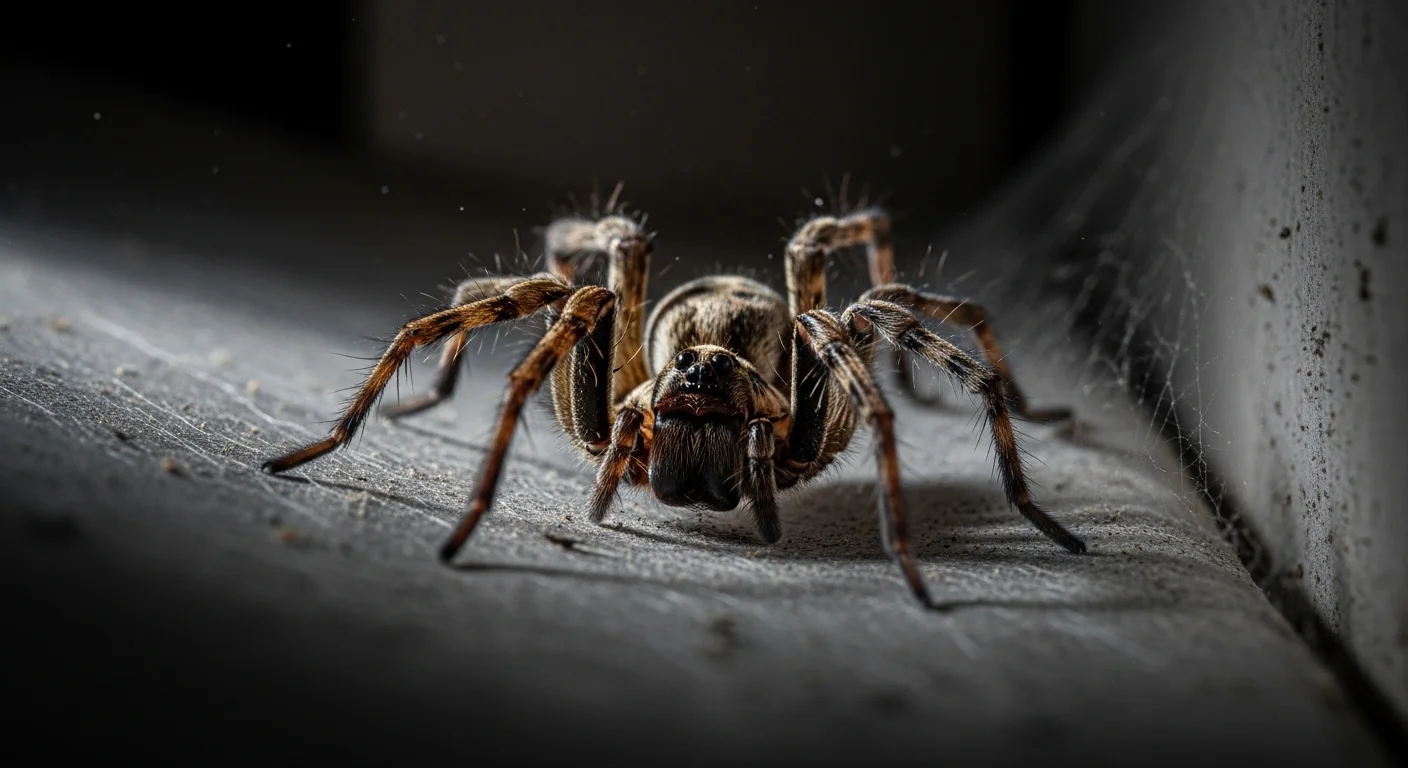
Wolf spiders are the large, fast-moving spiders that startle homeowners most often. They're ground hunters — they don't build webs to catch prey. Instead, they chase down insects on foot, which means you'll usually encounter them running across floors, along baseboards, or darting out from beneath furniture.
How to identify them:
- Size: 1/2 to 2 inches including legs — among the largest spiders in Utah homes
- Color: Brown to grayish-brown with darker stripes or chevron patterns on the body
- Body: Robust, hairy body with stout legs. Two large forward-facing eyes and six smaller eyes arranged in three rows
- Behavior: Active hunters, no webs. Fast runners. Mothers carry egg sacs on their spinnerets and baby spiders on their backs
Wolf spiders are not dangerous. They can bite if handled or trapped against skin, but the bite is comparable to a bee sting — temporary pain and mild swelling that resolves without medical treatment. They are extremely common in Coalville basements and garages, especially in fall when they move indoors following prey.
Despite their alarming appearance and speed, wolf spiders are actually beneficial. A single wolf spider can consume dozens of pest insects per week. If you find one and prefer it gone, slide a cup over it and release it outdoors rather than killing it.
Hobo Spiders
Hobo spiders have a complicated reputation in Utah. For years they were classified as dangerously venomous, appearing on warning lists alongside brown recluses and black widows. That classification has changed significantly based on updated research.
How to identify them:
- Size: 1/3 to 2/3 inch body length (about 1 to 1.75 inches with legs)
- Color: Brown with a lighter stripe pattern and chevron-shaped markings on the abdomen
- Web: Funnel-shaped webs built at ground level — the spider hides in the narrow end of the funnel and rushes out to grab prey that touches the web
- Behavior: Poor climbers. Almost always found at ground level in window wells, basements, under stairs, and around foundation edges
In 2015, the CDC removed the hobo spider from its list of venomous spiders. Research showed no evidence that hobo spider venom causes the necrotic (tissue-destroying) wounds previously attributed to it. A hobo spider bite may cause mild local redness and swelling similar to a bee sting, but it is not considered medically significant for healthy adults.
Hobo spiders are common in Summit County, especially in homes with window wells, ground-level entry points, and basements with exterior access. Their funnel webs in window wells are a frequent sighting. While not dangerous, large populations can indicate excess moisture and insect prey around the foundation.
Black Widow Spiders
The black widow is the only spider in Summit County with medically significant venom. While encounters are less common at our elevation than in Utah's lower valleys, black widows are present in the region and every homeowner should be able to identify them on sight.
How to identify them:
- Size: Female body about 1/2 inch, up to 1.5 inches with legs. Males are much smaller and rarely seen
- Color: Shiny, jet-black body with a distinctive red or red-orange hourglass marking on the underside of the abdomen
- Web: Messy, irregular, tangled webs (not organized orbs or funnels) in dark, undisturbed areas
- Behavior: Shy, reclusive. Builds webs in dark corners, under woodpiles, in sheds, garages, meter boxes, and outdoor storage areas. Rarely found in living spaces
If bitten by a black widow spider: remain calm, apply ice to the bite area, photograph the spider if possible, and seek medical attention immediately. Symptoms can include severe muscle pain, cramping, sweating, nausea, and elevated blood pressure. Children, elderly individuals, and those with compromised immune systems are at highest risk. Call 911 if you experience difficulty breathing, severe swelling, or dizziness.
Black widow venom is a neurotoxin that affects the nervous system. While fatalities are extremely rare with modern medical treatment, bites cause intense pain and systemic symptoms that require medical management. The spiders themselves are not aggressive — bites typically occur when a person unknowingly puts their hand into a web while reaching into a woodpile, storage box, or cluttered garage area.
Prevention focuses on eliminating the dark, undisturbed spaces widows prefer. Wear gloves when handling firewood or reaching into storage areas. Keep garage and shed floors clear of clutter. Shake out shoes and gloves that have been sitting in storage before putting them on.
Common House Spiders
The common house spider (Parasteatoda tepidariorum) is responsible for most of the cobwebs you find in corners, window frames, and ceiling edges. They're small, unobtrusive, and completely harmless to humans.
How to identify them:
- Size: Small, about 1/4 inch body length
- Color: Yellowish-brown to tan with mottled darker markings on the abdomen
- Web: Classic irregular cobwebs in corners, windowsills, and ceiling junctions
- Behavior: Sedentary web-builders. Stay in or near their web waiting for prey. Will abandon webs and build new ones if a location isn't productive
House spiders are genuinely beneficial. They catch flies, mosquitoes, moths, and other nuisance insects that enter your home. A few cobwebs in the corners of a basement or garage are a sign of a healthy ecosystem, not a pest problem. If cobwebs are a cosmetic concern, simply knock them down with a broom — the spider will relocate.
"Most of the spiders we encounter during home inspections are beneficial species that are actually helping control other pests. We always recommend tolerance when possible and targeted control only when medically significant species like black widows are involved."
Woodlouse Spiders
The woodlouse spider (Dysdera crocata) is one of the most alarming-looking spiders homeowners encounter, but it's completely harmless to humans. Its appearance — reddish-brown body, oversized fangs, and stocky build — causes frequent misidentification as something dangerous.
How to identify them:
- Size: About 1/2 inch body length
- Color: Distinctive reddish-orange head and legs with a cream or grayish abdomen
- Fangs: Disproportionately large, forward-projecting fangs designed for piercing the hard shells of pill bugs (woodlice)
- Behavior: Nocturnal hunter, no web. Hides under rocks, logs, and debris during the day. Found in damp areas with high pill bug populations
The woodlouse spider's large fangs are specialized for its primary prey: pill bugs (also called roly-polies or woodlice). It can bite humans if handled, but the bite is no worse than a pinprick and causes no lasting effects.
Finding woodlouse spiders indoors is a strong indicator of a moisture issue. These spiders follow pill bugs, which require damp conditions to survive. If you're seeing woodlouse spiders in your basement or crawl space, there's almost certainly excess moisture that should be addressed — not just for spider prevention, but for the health of your home's foundation and framing.
Quick Identification Reference
Use this table to quickly identify the spider you've found and determine the appropriate response:
| Spider | Size | Color | Web Type | Danger Level | Common Location |
|---|---|---|---|---|---|
| Wolf Spider | 1/2 – 2 in. | Brown/gray, striped | None (hunter) | Harmless | Floors, basements, garages |
| Hobo Spider | 1/3 – 2/3 in. | Brown, chevron pattern | Funnel web | Harmless | Window wells, ground level |
| Black Widow | 1/2 in. body | Shiny black, red hourglass | Messy/tangled | Medically significant | Woodpiles, sheds, dark areas |
| House Spider | 1/4 in. | Yellowish-brown | Cobweb | Harmless | Corners, windowsills |
| Woodlouse Spider | 1/2 in. | Red-orange head, cream body | None (hunter) | Harmless | Damp areas, crawl spaces |
Reducing Spider Activity in Your Home
Since spiders follow their food, the most effective long-term strategy targets the prey insects that attract them. Here are the steps our technicians recommend for Summit County homeowners:
- Control prey insects: A general pest control treatment that reduces ants, flies, and other insects will naturally reduce spider populations within weeks
- Seal entry points: Caulk gaps around windows, doors, utility penetrations, and foundation cracks. Install door sweeps and repair torn window screens
- Clear exterior clutter: Move woodpiles, rock piles, and stored materials away from the foundation. These are prime spider harborage areas
- Reduce exterior lighting: Bright porch and garage lights attract flying insects, which attract spiders. Switch to yellow or sodium vapor bulbs that attract fewer insects
- Dehumidify basements and crawl spaces: Keep relative humidity below 50%. This discourages both moisture-loving insects and the spiders that eat them
- Declutter storage areas: Boxes, clothing piles, and undisturbed storage provide ideal hiding spots. Use plastic bins with tight lids instead of cardboard boxes
When to Call a Professional
Most spider encounters don't require professional intervention. However, certain situations warrant a call to a licensed spider control specialist:
- Black widow sighting: If you find a black widow inside your home or in frequently used outdoor areas (shed, garage, play equipment), professional treatment is strongly recommended. Where there's one, there may be more
- Large populations: If you're seeing spiders daily in multiple rooms despite keeping a clean, clutter-free home, the underlying insect prey population needs professional assessment
- Recurring despite cleaning: If spiders return quickly after you remove webs and declutter, there's likely a sustained insect population or entry point issue that needs targeted treatment
- Sensitive occupants: Homes with young children, elderly residents, or individuals with spider-bite allergies may benefit from preventive perimeter treatments
A seasonal pest control plan that includes perimeter treatments in spring and fall is the most reliable way to keep spider numbers low year-round.
Key Takeaways
- 4 of the 5 most common household spiders in Summit County are completely harmless to humans
- Black widows are the only medically significant species — shiny black body, red hourglass, messy webs in dark areas
- Hobo spiders are NOT dangerous — the CDC removed them from the venomous list in 2015
- Reducing prey insects is the most effective long-term spider reduction strategy
- Woodlouse spiders indicate a moisture problem that should be addressed
Frequently Asked Questions